

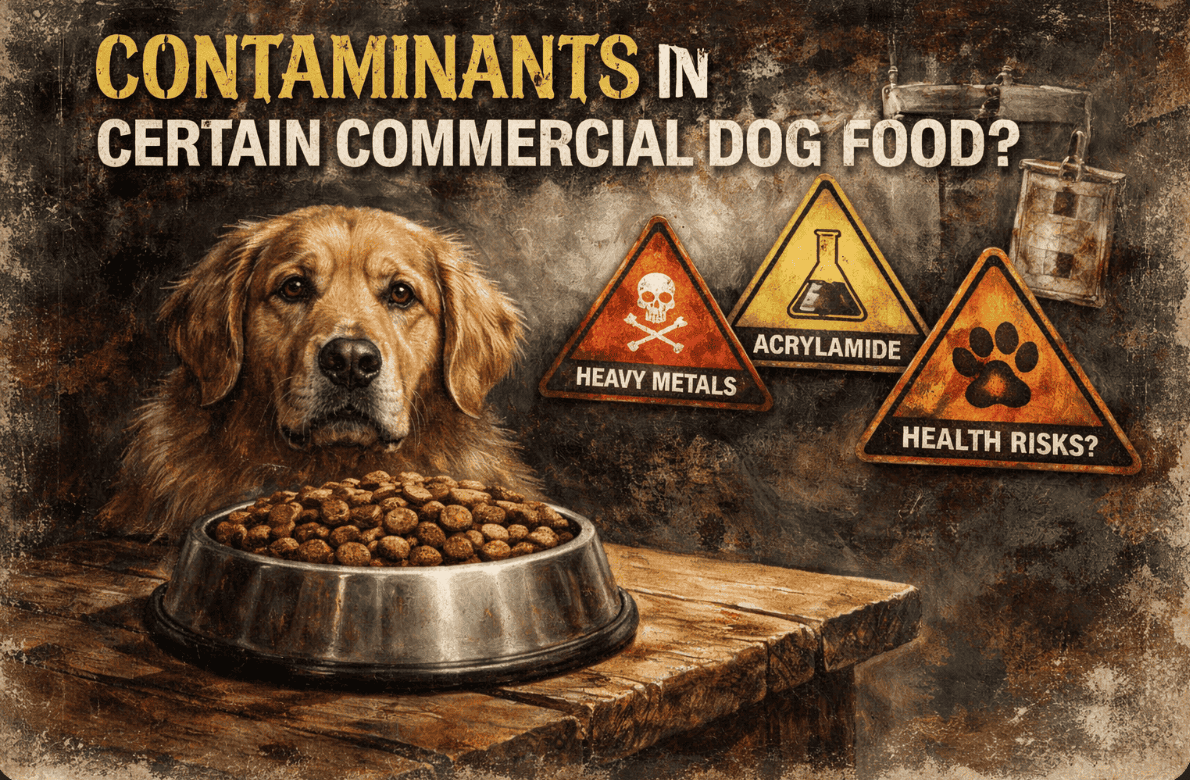
Recent national media reports have highlighted findings from independent testing that detected measurable levels of heavy metals and other chemical byproducts in certain commercially available dog foods.
According to the report, laboratory analysis of a sampling of products identified the presence of substances such as lead, mercury, and acrylamide. Acrylamide is a chemical that can form during high-temperature cooking processes and has been classified by health authorities as a probable human carcinogen based on animal studies. Heavy metals, depending on concentration and duration of exposure, may pose health risks.
The report does not allege that any specific manufacturer violated existing federal safety standards, and regulatory agencies have not announced enforcement findings related to the products discussed. Rather, the reporting raises broader questions about contaminant thresholds, long-term exposure, and transparency in labeling within the pet food industry.
Regulatory Context
Pet food is regulated under the Federal Food, Drug, and Cosmetic Act. The U.S. Food and Drug Administration (FDA) oversees safety standards and may issue recalls or advisories when products are found to be adulterated or otherwise unsafe. Allowable contaminant levels can vary depending on the substance and risk assessment framework applied.
In many cases, trace levels of heavy metals can be present in food products due to environmental background exposure. The legal and regulatory question often centers on whether levels exceed established safety thresholds or render a product “adulterated” under applicable law.
Potential Legal Considerations
Depending on the facts and future regulatory findings, issues that may arise include:
- Product liability claims if a product is shown to be unsafe or defective
- Consumer protection claims relating to marketing or labeling representations
- Warranty or misrepresentation claims if products are promoted as “premium,” “natural,” or “safe” but later shown to contain undisclosed contaminants at concerning levels
At this time, the reporting reflects independent testing results and public discussion. It does not constitute a finding of wrongdoing by any specific company.
Monitoring Developments
Pet owners and industry participants should monitor FDA announcements, product recalls, and further scientific or regulatory guidance. As additional information becomes available, regulatory or litigation activity may follow.
Disclaimer: The information provided in this blog post is for general informational purposes only and does not constitute legal advice. Reading this post does not create an attorney-client relationship between you and Sauder Schelkopf. Laws vary by jurisdiction, and the application of law depends on individual circumstances. You should not act or rely on any information in this post without seeking professional legal counsel. If you need legal assistance, please contact a qualified attorney to discuss your specific situation.