

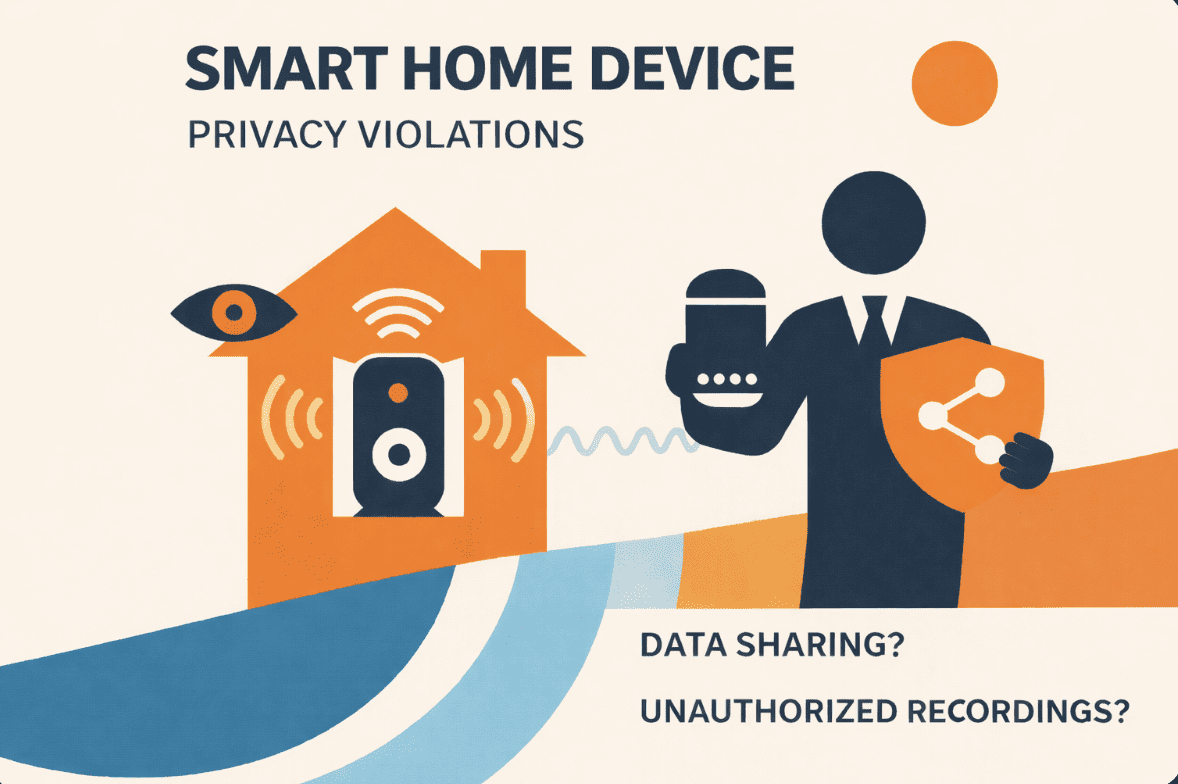
Smart home devices — including voice assistants, smart speakers, security cameras, thermostats, and doorbells — are now fixtures in millions of homes. These devices are marketed as convenient, efficient, and secure.
But when always-on technology collects, stores, or shares personal data without proper consent, transparency, or security safeguards, serious privacy concerns can arise.
In some situations, these practices may expose companies to consumer protection, wiretap, biometric privacy, or data security claims.
How Smart Devices Collect Data
Many connected home devices are designed to:
- Continuously monitor audio for “wake words”
- Record voice commands
- Capture video footage
- Track user behavior and device usage
- Store recordings in cloud servers
- Share data with third-party service providers
While such functionality is disclosed in varying degrees within terms of service agreements, the scope and use of collected data is not always clear to consumers.
Potential Legal Issues
Depending on the facts and jurisdiction, legal issues may include:
Unauthorized Audio Recording
If devices record conversations beyond intended activation triggers, questions may arise under:
- State wiretap laws
- Electronic communications privacy statutes
- Consumer protection laws
Certain states require consent before recording communications.
Biometric Data Collection
Some smart home devices use:
- Voice recognition
- Facial recognition
- Behavioral pattern analysis
In states like Illinois, biometric privacy statutes regulate the collection and storage of biometric identifiers and may allow statutory damages.
Data Sharing With Third Parties
Concerns may arise where:
- Recordings are reviewed by contractors
- Data is shared for marketing purposes
- Usage analytics are monetized
- Information is transferred without meaningful disclosure
Transparency and informed consent are central to evaluating these claims.
Data Breaches
If sensitive recordings or household activity data are accessed due to inadequate cybersecurity measures, affected users may face:
- Identity theft risk
- Household security exposure
- Privacy intrusion
Companies that fail to implement reasonable safeguards may face liability under data protection laws.
Arbitration Clauses and Class Actions
Many smart device manufacturers include arbitration provisions in their user agreements. The enforceability of those provisions depends on:
- How consent was obtained
- Whether disclosures were clear
- Applicable state and federal law
In certain situations, class action claims may still proceed.
What Consumers Should Consider
If you use smart home technology, consider:
- Reviewing device privacy settings
- Understanding data retention policies
- Opting out of unnecessary data sharing
- Monitoring account activity logs
If you believe a device recorded or shared information without proper disclosure or consent, legal review may be appropriate.
Monitoring Emerging Litigation Trends
Courts nationwide are increasingly addressing privacy issues involving:
- Voice assistant recordings
- Smart camera surveillance
- Pixel tracking on connected apps
- Biometric data storage practices
As technology evolves, so do the legal standards governing consumer privacy.
Disclaimer: The information provided in this blog post is for general informational purposes only and does not constitute legal advice. Reading this post does not create an attorney-client relationship between you and Sauder Schelkopf. Laws vary by jurisdiction, and the application of law depends on individual circumstances. You should not act or rely on any information in this post without seeking professional legal counsel. If you need legal assistance, please contact a qualified attorney to discuss your specific situation.